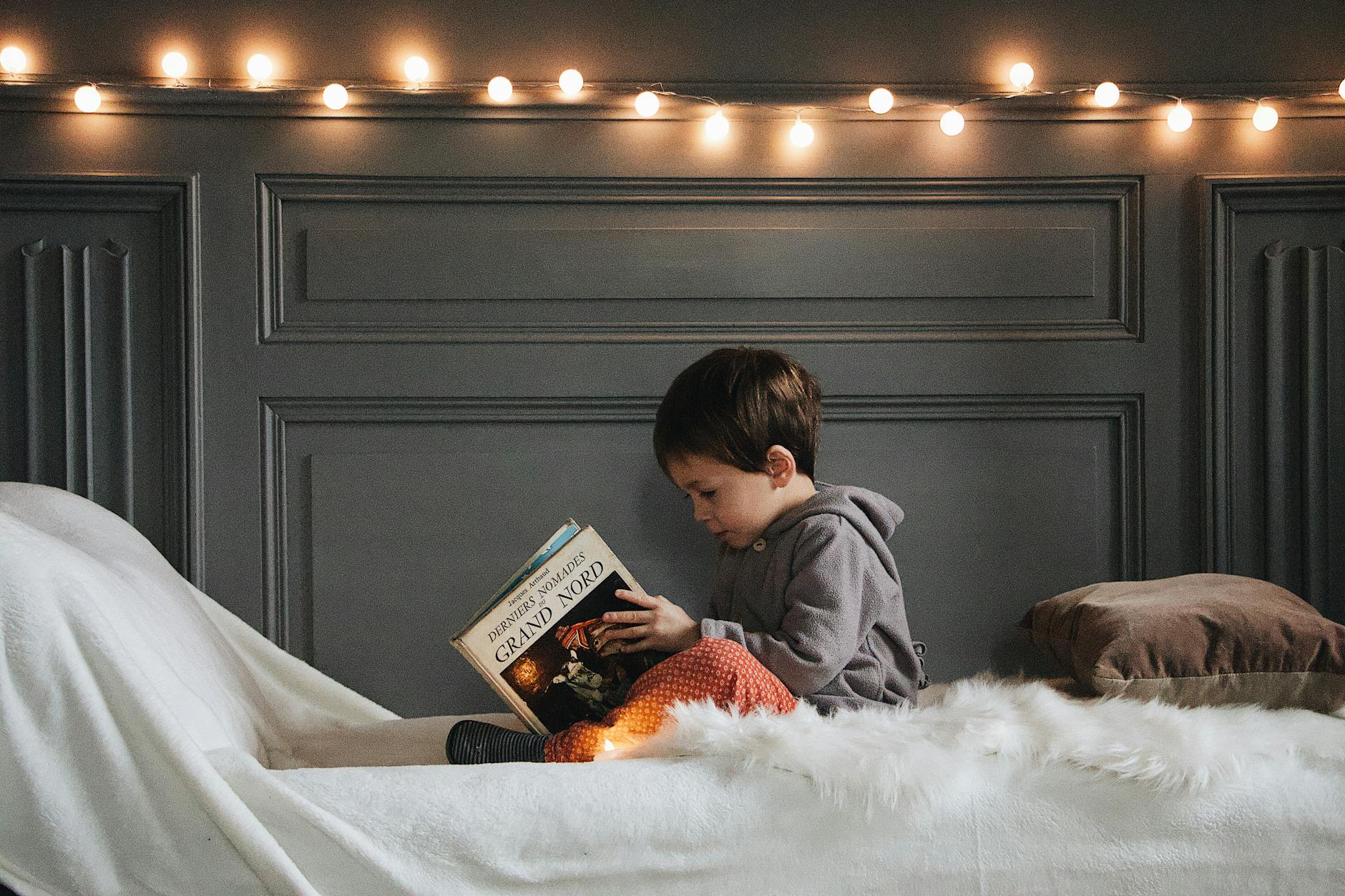
A child's room should not be a collection of random elements purchased for the current stage of development. Well-chosen furniture for a child's room can serve from the first year of life until the end of high school. The key lies in two decisions at the purchasing stage: the construction material and a modular strategy that allows for modifying the shape of the furniture as the user's needs grow.
Solid wood, local production, hygiene certificates, rounded edges, and a neutral color palette are five criteria that reappear in every recommendation from children's interior designers. All of them can be verified before making a purchase decision, requiring no trust in the manufacturer's marketing claims. Below, we break down each of these elements into their fundamental components.
Why is natural wood healthier for a child than MDF?
Formaldehyde, classified by IARC WHO in group 1 as a carcinogenic factor for humans, appears in urea-formaldehyde adhesives used in the production of MDF and particle boards. The emission of formaldehyde from MDF boards lasts for yearsalthough the level decreases over time. The standard E1 allows the release of up to 0.124 mg/m³ of air, the standard E0 ten times less. Solid pine and beech wood do not contain these adhesives, and the emission of volatile organic compounds is limited to the natural essential oils of the wood.
The smell of new furniture made from MDF, which lingers for months after purchase, is due to the evaporation of formaldehyde and other VOCs. Premium manufacturers use E0 or CARB 2 boards (the California standard in effect since 2018), while cheaper variants stick to E1 or worse. In a child's room, where the user spends 10-14 hours a day, every decision to reduce emissions has a real impact on air quality.
Pine wood is most often chosen for cribs and cabinets, while beech is used for chairs, desks, and structures requiring greater mechanical strength. Pine weighs 420-500 kg/m³Beech is as high as 680-720 kg/m³This difference translates to the hardness of the surface and the resistance to impacts from toys. Oak provides even higher parameters (700 kg/m³), but the price closes the topic for most family budgets.
How should you choose the design of furniture to match a child's aesthetic sensitivity?
A child's environment shapes visual sensitivity in the first ten years of life; an interior with a coherent aesthetic acts as long-term training for perception of form. Furniture with gentle lines, subtle colors, and clear proportions sets a reference point for the future choices of the adult user. In contrast, a furniture set with fairy tale character motifs and intense poster colors ages faster than the child outgrows it.
The Scandinavian school of children's furniture design, represented by brands such as , , , is based on light wood, a white or light gray palette, and geometry simplified to a minimum. This trend also includes furniture (https://mysweetroom.pl/69-meble-pinio), combining pastel details with simplicity of form. Italian furniture in the same premium segment, such as , adds subtle pastel accents and natural textile materials. Polish production from manufacturers, for example, , , , offers a similar aesthetic at prices 30-40 percent lower.
The devil is in the scale. A children's piece of furniture cannot be a smaller version of an adult piece; the proportions of the seat, height of the tabletop, and depth of the drawers must match the user's height at that moment. A chair for a three-year-old has a different height than one for a seven-year-old, with a height-adjustable desk regulated from 52 to 82 cm covers the entire primary school period. Ergonomic manufacturers like or offer such mechanisms with a 10-year warranty.
How many years do solid wood furniture pieces last in a child's room?
Furniture made of solid pine or beech, when properly used, exceeds 10-15 years without signs of structural wear. The surface shows traces of everyday use, scratches from toys, small dents from falls, but the structure remains rigid. Furniture made of MDF or particle board shows the first signs of fatigue after 5-7 years, with loosening screws in the corners, veneer cracks at the edges, and bulging from moisture.
This distance results from the mechanics of the material. Solid wood works with moisture seasonally, shrinking in winter, swelling in summer, but returning to its original dimensions. MDF board absorbs moisture irreversibly; each cycle of climatic changes weakens its internal structure. Repairing solid wood involves sanding and re-oiling, while a cracked MDF board must be replaced entirely.
Renovating wooden furniture after ten years of use restores its factory-new appearance. The cost of sanding and re-oiling a crib or desk amounts to 150-350 PLN in the carpentry workshop, independently 40-80 PLN for materials. The same piece of furniture made from MDF goes to disposal, with the cost of removal and purchasing a new one ranging from 800 to 2500 PLN depending on the type.
How do modular systems adapt furniture to a child's age?
Modularity, a key feature of modern furniture systems for children's rooms, allows one set to be transformed instead of purchasing additional ones. Furniture for a child's room In the modular version, they transform together with the user, without interfering with the structure. A changing table in the first year of life becomes a classic dresser after removing the top module, a crib measuring 120 by 60 cm It unfolds into a version 200 by 90 cm At the preschool stage, a desk with an adjustable top accommodates heights from 100 to 180 cm.
Stokke Sleepi, Oeuf Sparrow, and Micuna systems are three examples of bed constructions that undergo a complete transformation. The starting price of a premium model ranges from 2500-4500 PLN, but spread over 15 years of use gives 170-300 PLN per year, four times cheaper than subsequent cribs purchased every few years. The calculation starts to yield positive results after the child's seventh year.
Not every child's room requires modularity. For the second or third child in a family, where furniture is intended to serve for a maximum of 3-4 years before being passed down to younger siblings, cheaper single-function constructions are more economically viable. Modularity pays off with the first child, plans to stay in the same apartment, and a long usage horizon.
What certifications and standards should children's furniture have?
The standard PN-EN 716 it regulates the safety of children's cribs, specifies the maximum gaps between the bars (45-65 mm, to avoid head entrapment), the minimum height of the side, and the structural strength under loads. The standard PN-EN 12227 it concerns playpens, PN-EN 14988 high chairs. The seller is obliged to present a certificate of compliance with these standards; its absence disqualifies the furniture from purchase.
The PZH hygiene certificate confirms that the materials used do not contain substances harmful to health in contact with a child. The FSC or PEFC certificate guarantees that the wood comes from forests managed according to sustainable forestry principles. The CE marking on cribs and playpens confirms compliance with European Union directives regarding product safety.
Paints and finishing lacquers require separate verification. The DIN EN 71-3 certificate specifies the permissible concentrations of heavy metals (lead, cadmium, chromium) in the coatings of toys and children's furniture. Natural hard wax oils, such as Osmo Klarwachs, Rubio Monocoat, meet the requirement toy safety according to this standard, remain non-toxic even in contact with a child's saliva.
Which construction details determine the safety of furniture?
Rounded edges and corners, with a minimum radius 3 mm, eliminate the risk of skin lacerations in case of a fall onto the furniture. Protruding screws and hinges should be concealed in cover plugs or built into the structure. Non-slip feet, rubber or silicone pads on the bottom, prevent the furniture from sliding on the floor under the weight of a climbing child. Soft-close systems for drawers and doors protect fingers from being pinched.
Wall mounting, mandatory for tall shelves and dressers over 60 cm in height, prevents the furniture from tipping over onto a child trying to climb on it. Statistics from the American Consumer Product Safety Commission shows that furniture tips over onto a child on average every 17 minutes in the USA, and every two weeks this leads to death. Wall anchors included with products from IKEA, Vox, or Bellamy can be installed in 15 minutes and completely eliminate this risk.
Does every shelf require anchoring? Not always. Furniture lower than. 60 cmPositioned close to the wall, with a wide base, they practically have no chance of tipping over even under the weight of children. The anchoring rule primarily applies to narrow, tall dressers and shelves with a depth of less than 40 cm, where the center of gravity is high.
What color palette works well in a child's room?
A neutral base wins over intense colors in children's rooms for a simple reason: it remains relevant longer. White, light gray, beige, and light wood provide a background that is easy to modify with textiles, posters, and accessories that are changed every few years along with the child's changing interests. A room finished in intense orange with an airplane motif requires repainting and furniture replacement when the child outgrows their fascination with aviation after two years.
An accent color is introduced through interchangeable accessories, such as cushions, rugs, wall art, and curtains. This principle, known from residential interior design, works particularly well in children's rooms, where preferences change cyclically every 2-4 years. Pastel pinks, mints, and yellows introduced through textiles provide a refreshing change. 200-500 PLN instead of a complete furniture replacement.
The color scheme of children's furniture should harmonize with the rest of the apartment if the door to the room is open for most of the day. A child's room as a closed color world works well in single-family homes, while in a small apartment, it is better to maintain a common palette in all rooms. Visual continuity optically enlarges the entire layout.
How to choose furniture that grows with your child?
The adjustment of the tabletop and seat height is the first criterion for adaptive furniture. A growing desk, such as the Moll Champion, has an adjustment range. 53-82 cm Covering a height range from 100 to 180 cm, the ergonomic Kettler Chair Plus adjusts the seat height for children aged 6 to 14 years. Mechanical (screw) adjustment is cheaper, while electric adjustment with memory positions is more expensive by 800-1500 PLN, but significantly more convenient for daily use by the child independently.
The growing bed operates on the same principle. The initial model measuring 120 by 60 cm for a newborn expands to 140 by 70 cm for a two-year-old, then to 160 by 80 cm for a preschooler, ultimately to 200 by 90 cm At the stage of primary school. The construction requires a mattress replacement at each stage, with the cost of a premium children's mattress ranging from 400 to 1200 PLN depending on the size.
Modular wardrobes with interchangeable rods and shelves adapt to the growing size of the child's clothing. In the first year of life, mainly shelves for bodysuits and diapers are needed, while in school age, a rod for shirts and jackets from blouses. Systems from , , or allow changing the interior configuration of the wardrobe without replacing the entire structure, with the cost of changing internal components ranging from 300-800 PLN every few years.


Comments readers