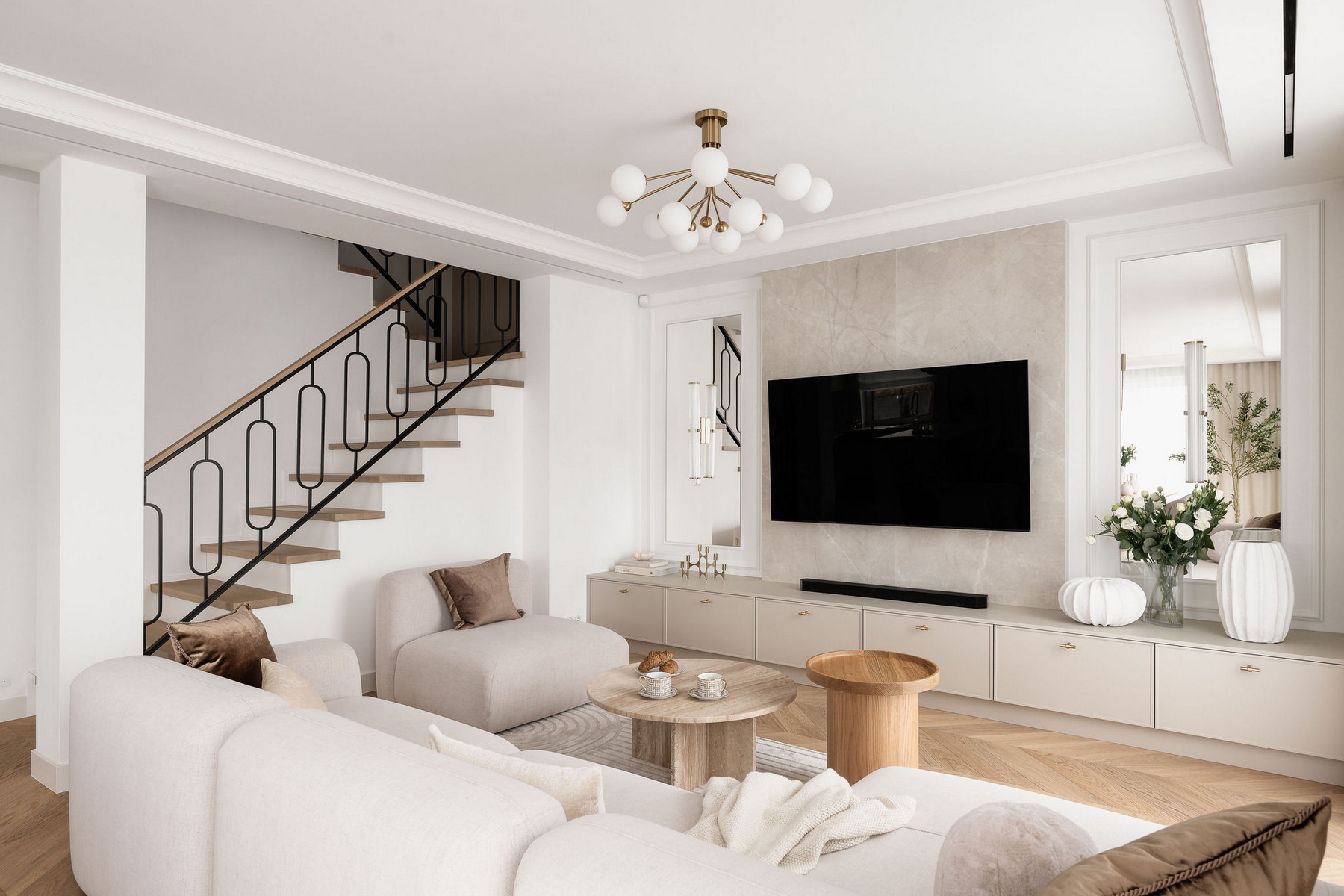
A project can be called luxurious in many ways, but it is the materials that ultimately determine whether the interior functions as a premium realization or merely looks like one. Luxurious interior finishes in top-class Polish studios are based on the physical quality of raw materials, precision of assembly, and the way materials age over the decades. A premium client pays not only for the aesthetics of the first day but for the assurance that after twenty years the surface will still look new or more mature and beautiful.
Why does the floor serve as the foundation of style?
The flooring in a premium apartment occupies the most visible area and thus most strongly defines the character of the interior. French oak in a herringbone or chevron layout, naturally oiled or stained in a tobacco tone, costs in Poland from 380 to 950 PLN/m² for the material alone, and installation with substrate preparation raises the bill by an additional 180-300 PLN/m². This is a level at which 60 m² of living room with dining area amounts to nearly 60,000 PLN just for the flooring.
Premium alternatives include natural marble Calacatta Oro or Statuario cut into slabs of size 800×1600 mm, sintered stone in a marble simulation or exotic wood wenge, American walnut, and Santos rosewood. Each of these materials carries a different aesthetic code. Oak brings Scandinavian warmth, marble emphasizes classic prestige, and sintered stone works best in minimalism. A premium floor requires precise preparation of the screed; the substrate's humidity must not exceed 2% for wood, otherwise the material works and cracks over several years.
How do walls become works of art?
The premium wall has ceased to be a backdrop for paintings, instead serving as a work of art itself. Artistic wallpapers hand-painted from the studios of or cost 18,000-45,000 PLN for a strip 3 m high and requires professional installation within three days. Woven wall panels made of silk, solid wood oil-finished paneling, and hand-molded plaster panels replicating classical details from the 17th century, all of this appears in apartments valued at over 5 million PLN.
Expand on the topic in the article:
Decorative plasters fit into this direction as a cheaper yet equally impressive solution. Venetian grasello, Moroccan tadelakt, strié technique, lime travertino, each of them provides a depth unattainable with traditional paint. Grasello made by a skilled craftsman costs 350-650 PLN/m² and requires 3 to 5 layers applied at 24-hour intervals. A wall with real Venetian plaster gains a depth that no photograph can replicate; only on-site can one feel the difference between the polished and matte surfaces.
What countertops define a premium kitchen?
A premium kitchen countertop most often comes from one of three groups: natural Calacatta or Statuario marble cut uniformly from the block, Neolith or Dekton sintered stone with a thickness of 12-20 mm, or composite materials like Silestone or Corian that allow for seamless welding. Each material has different functional characteristics. Marble is striking but requires sealing every 2-3 years and reacts to wine, lemon, and grease. Sintered stone is resistant to stains, high temperatures, and impacts, but the vein pattern is printed, not natural.
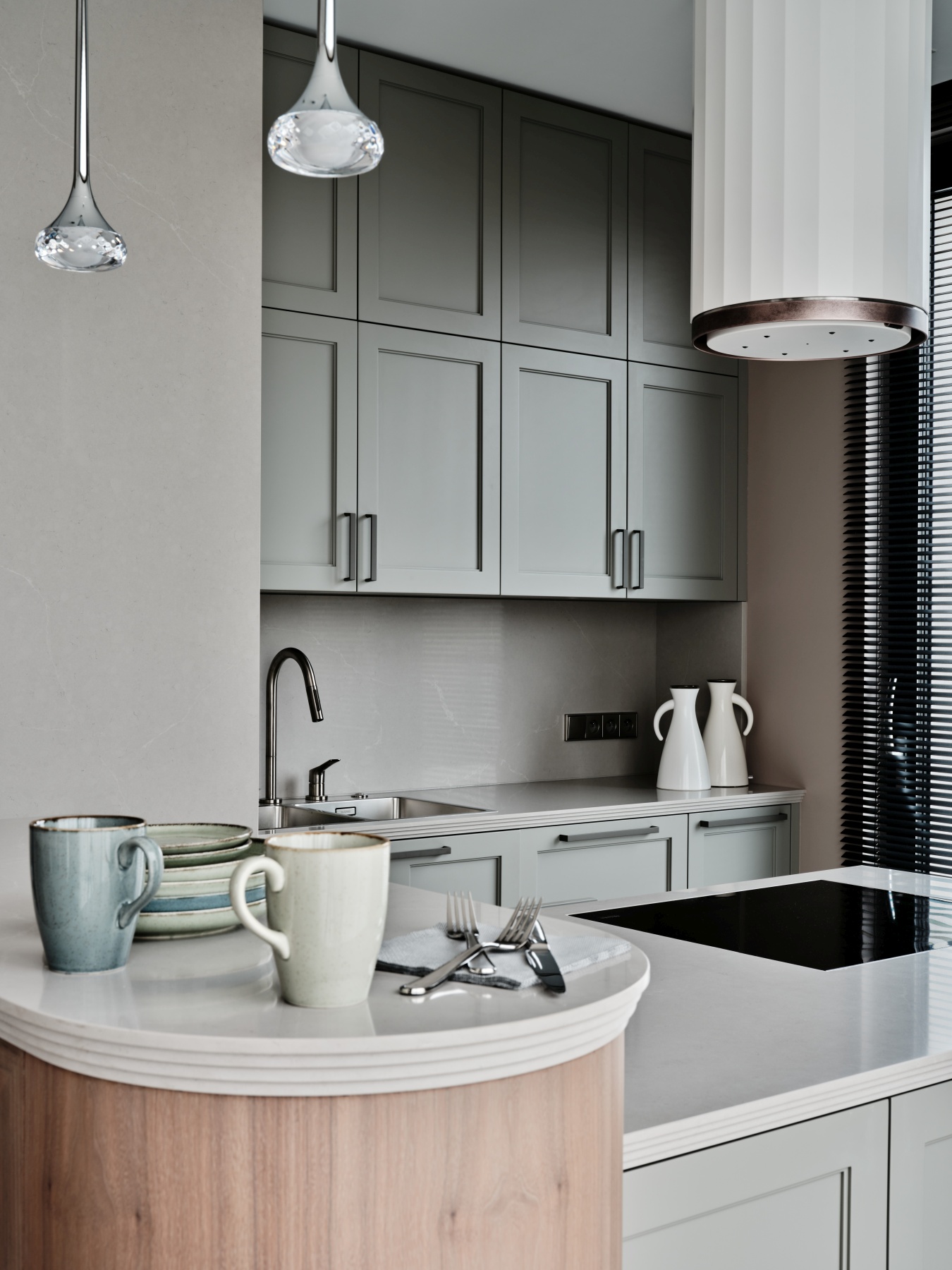
The kitchen project by Roland Stańczyk / RS Studio combines gray shaker fronts in a limestone color with a white quartz countertop featuring a subtle pattern. Crystal lampy wiszące droplets create a decorative accent, and the white cylindrical hood works as a sculptural centerpiece. The single island's oak front introduces a warm tone, tempered by the coolness of quartz. It's important to remember that a premium countertop requires proper backing. A 40 mm thick solid MDF undercounter provides the rigidity needed to prevent the stone from cracking under kitchen loads.
If you are interested in this topic, read:
When to use large-format tiles?
Large-format slabs have transformed luxury interior finishes in the last ten years. Formats 3200×1600 mm and thicknesses from 6 to 20 mm allow for covering an entire bathroom wall, shower, or kitchen backsplash without a single joint. The effect is dramatic, with Calacatta Viola marble and its rusty veins transitioning seamlessly from the floor to the wall and from the wall to the ceiling, creating a sculptural interior on a grand scale. The price of the slabs starts at 320 PLN/m² for the basic sintered stone and reaches 1,800 PLN/m² for natural marble.
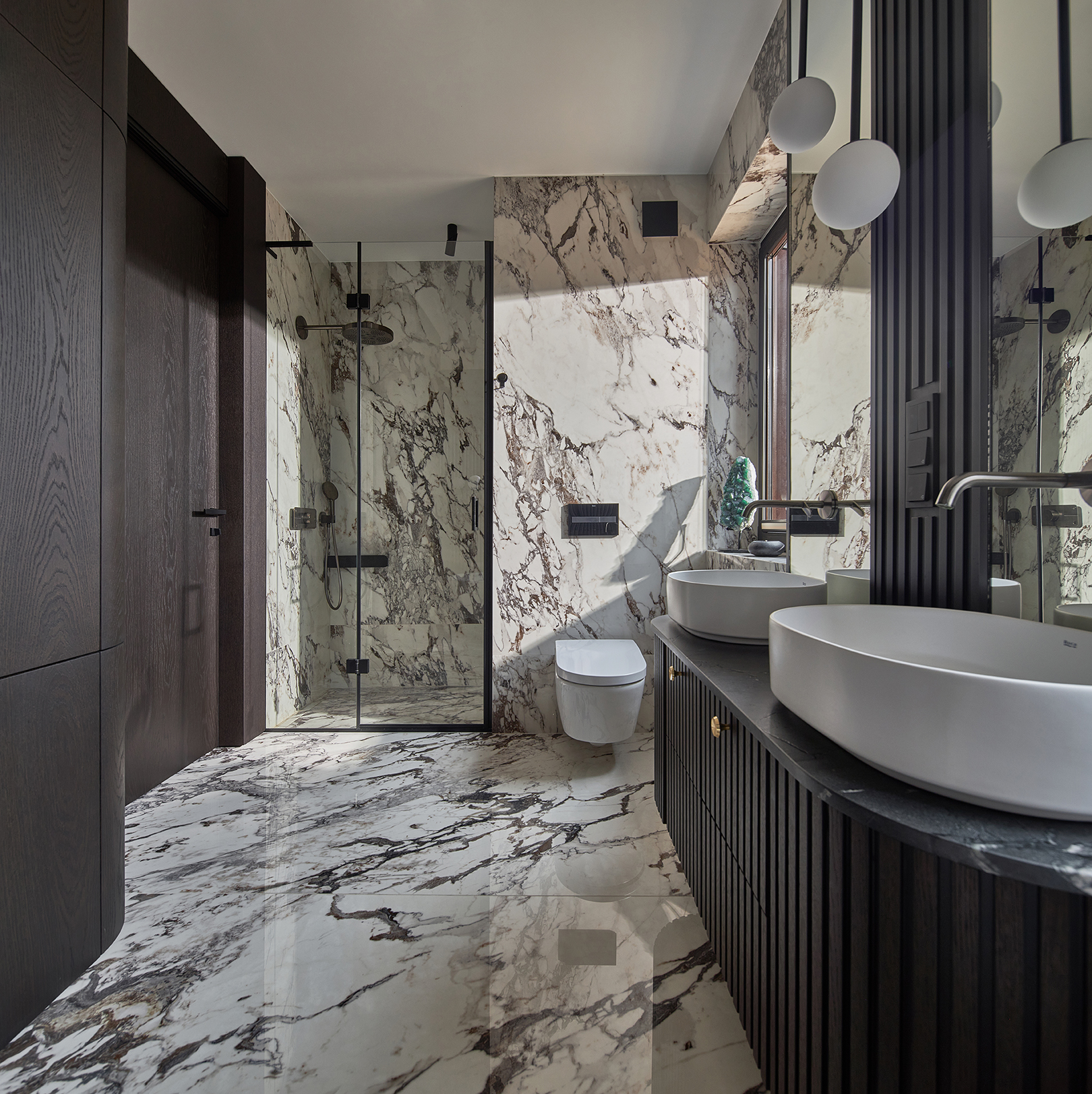
Łazienka Deer Design showcases the full potential of this technology. The large-format Calacatta Viola marble with dramatic veining runs through the floor, walls, and shower cabin, creating one cohesive visual fabric. The dark ribbed oak cabinetry engages in conversation with the light marble, while two white countertop sinks draw the eye to the center of the composition. walk-in shower The glass pane emphasizes the openness of the layout. The installation of large-format panels requires a specialized team, dedicated transport infrastructure, and precise laser measurement of the room. Not every renovation crew can handle that.
What fabrics bring sensuality?
Fabrics in a premium apartment work like a second skin for the room, introducing texture, temperature, and acoustics. Italian velour with a weight of 280-380 g/m² on the upholstered headboard, Belgian linen on the drapery curtains, wool bouclé on the sofa and armchairs, cashmere on the bedspread in the bedroom—each of these materials carries a different sensory message. The price of an upholstery set for a premium living room reaches 15,000-45,000 PLN for the materials alone, before installation.
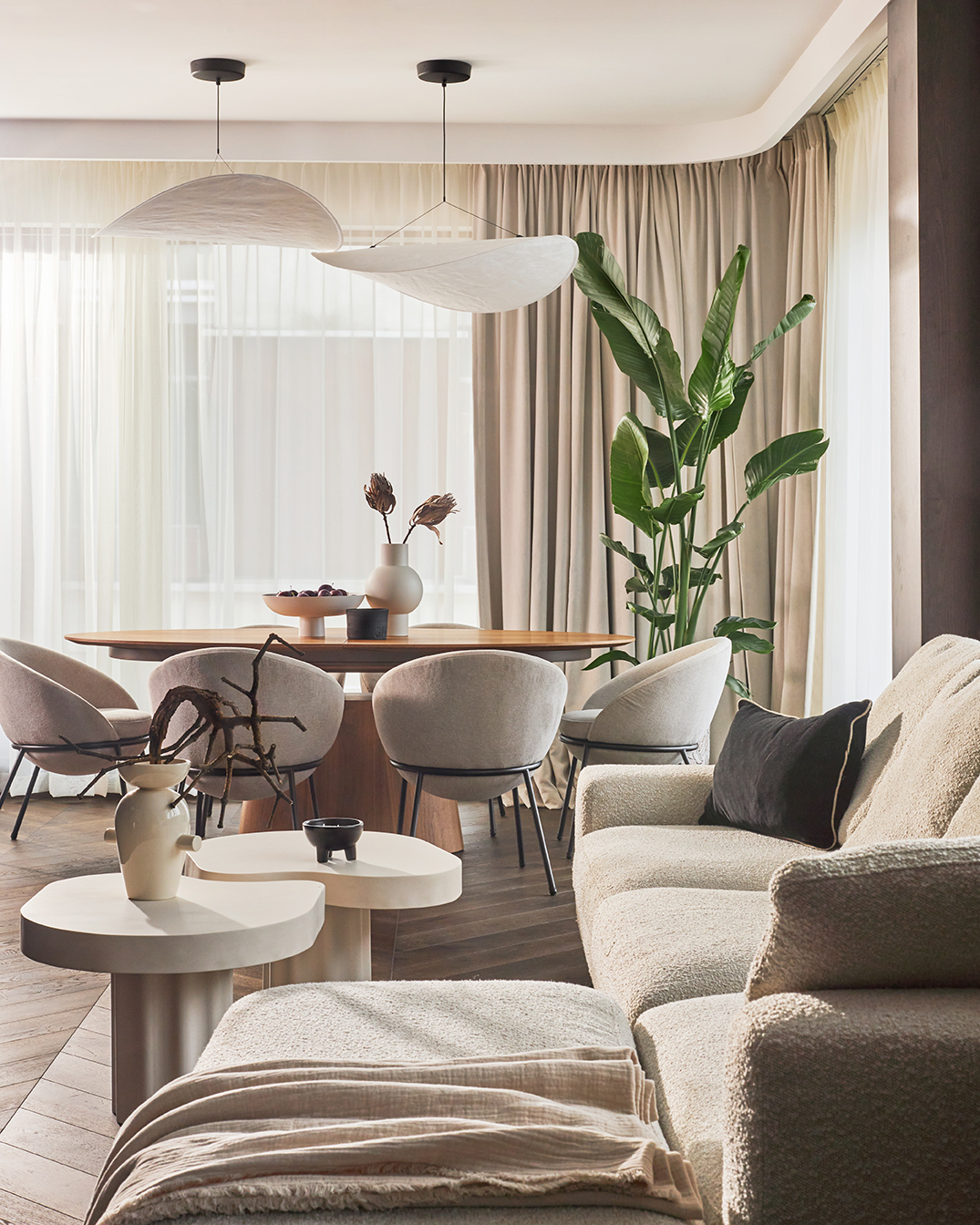
Realizacja Deer Design showcases masterful work with fabrics. A cream modular bouclé sofa, upholstered armchairs in the same texture around a round wooden table, taupe drapery curtains reaching from floor to ceiling, and a shadow against the backdrop of a banana plant. A sculptural pendant lamp in the shape of an umbrella made of washi paper introduces an organic texture accent that harmonizes with the bouclé. It's worth planning fabric maintenance at the selection stage. Wool bouclé requires professional cleaning every two years, while natural silk velours loses value with careless use in 5-8 years.
How do glass, metal, and ceramics introduce accents?
Glass, metal, and ceramics serve as precise accents in a premium apartment, not as a background. Colored glass in recesses, doors with black iron profiles, brass globe sconces, hand-glazed Moroccan zellige tiles—each of these elements raises the standard of the section in which it appears. Brushed brass metal costs 60-80% more than stainless steel, but it patinizes over time and gains depth.
The key is moderation. Too much brass creates a Hollywood effect, too much black creates an industrial mood, and too much glass makes the interior lose its intimacy. Projects from Polish studios show that the best approach is to choose one dominant metal (most often brass or matte black) plus one neutral complement (brushed chrome or anodized aluminum). Three metals in one room usually look chaotic. Hand-glazed ceramics, on the other hand, appear in composite tiles, decorative flower bowls, and countertop vessels, serving as a craft accent.
What is the significance of personalization and craftsmanship?
Personalization enters the premium apartment through custom-made details. Custom furniture from a Polish carpenter specializing in architect projects, upholstery sewn by a tailoring workshop, mirrors with decorative frames carved from oak wood to fit the specific niche dimensions, and wall sconces designed specifically for a particular wall. Handcrafted craftsmanship costs three times more than its factory equivalent, but it gives the interior a unique character. The premium client pays for this uniqueness.
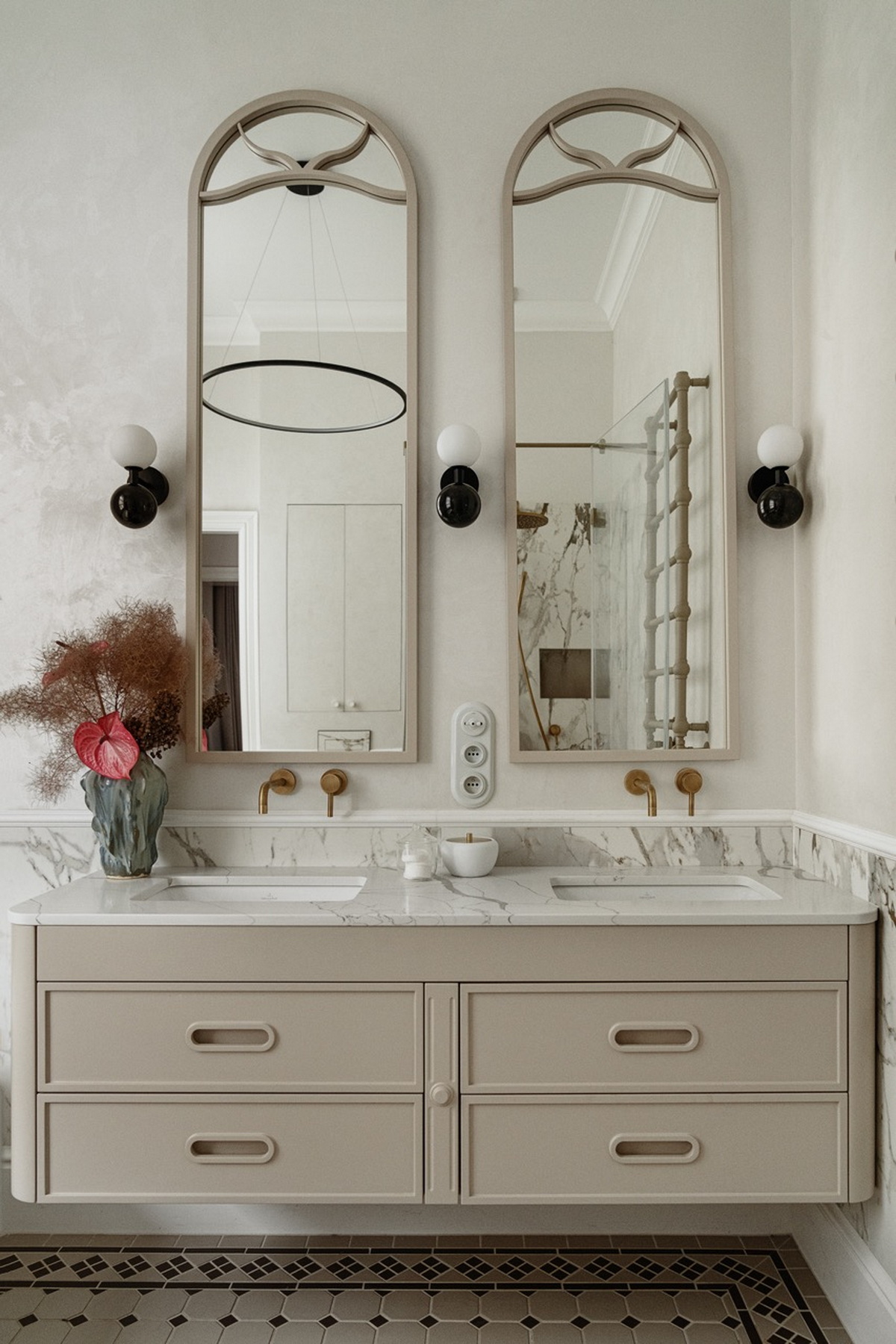
The bathroom Biuro Kreacja showcases the beauty of craftsmanship in fine details. Two arched mirrors in beige frames with hand-milled woodwork of a 16th-century design, a black spherical hanging lamp as a signature element, brass wall-mounted faucets introducing a warm metallic accent, and a geometric black-white-terra cotta mosaic on the floor made from hand-cut tiles. Venetian plaster on the walls with a subtle texture serves as a backdrop. Each element was either designed or selected individually for this specific bathroom, not from a catalog. This defines the difference between a standard and a premium apartment.
Why does luxury lie in the details?
Luxury in a premium apartment ultimately lies in the details that are not visible at first glance. Grout flush with the countertop, cabinet handle matched to the angle of window lighting, baseboard made of the same wood as the floor and oiled with the same oil, electrical socket in a frameless version sunk into the wall level with the plaster. The devil is in the details, as interior architects say. A premium client often cannot specify why the interior looks expensive, they just feel that it does.
The material sum for a premium apartment of 100 m² typically amounts to 800,000-2,200,000 PLN for the finishes alone, excluding furniture and systems smart home. This is a value that rarely depreciates in the first five years of use. Good materials work over time to benefit the interior. Marble develops a patina, brass transitions from bright gold to soft amber, and oiled wood deepens the grain pattern. Luxurious interior finishes are an investment that pays off not only in daily enjoyment of use but also in the resale value of the project. Other projects by Polish studios published on architectural portal show how precisely selected materials create an interior with timeless class.
Comments readers